SUBSCRIBE TO ROTORY ROTORY BACK ISSUES DOWNLOAD THIS ISSUE TO YOUR COMPUTER


NOVEMBER / DECEMBER 2006 PREVIEW


ALIGN 600 ELECTRIC

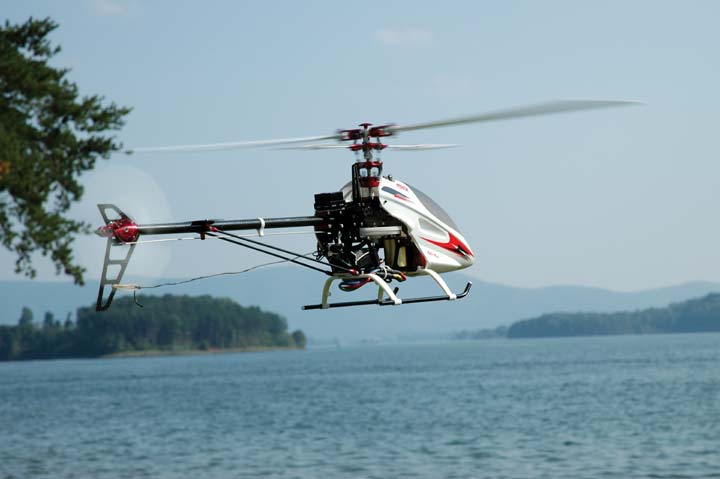
600 is a new eight-pound electric helicopter designed for 600 mm rotor blades. It features a metal rotor hub, metal swashplate with 120-degree CCPM control, and a belt drive tail rotor system. The physical size of the T-Rex 600 is similar to most 50-class nitro engine powered RC helicopters. The 600's flight performance is comparable or even better than most 50-class engine powered helicopters. The T-Rex 600 is capable of approximately five minutes of heavy 3D flying on a 6S 4000 mAh Li-Po battery pack. The T-Rex 600 first became available around August 2006, when it made its 3D debut at the XFC Championships.
At present, there is a standard version with aluminum frames and a carbon version with carbon graphite frames. We chose the carbon frame model for this review since it was a bit lighter. The price of the carbon combo kit is under $600, which includes an Align brushless motor, an Align 75 amp electronic speed controller (ESC), an Align 2 cell 7.4 volt Li-Po battery for receiver and servos, and a 5.8 volt regulator. A flight battery is not included. Align recommends the 6S 4000 mAh Li-Po flight battery.


MX-450 XS ELECTRIC

Before I begin this overview of the MX-450 XS Extreme 3D Helicopter from Heli-Max, I'll have to first disclose that I'm a "MX" addict. The MX-450 is now my third MX model, and to be honest with you, it's become one of my favorite micro's.
The MX-450 comes ARF and tricked-out right out of the box. Since it's designed for 3D flying, it comes standard with just about every upgrade you'll need. A few of the more important upgrades are a metal swashplate, metal tail case, metal gears, metal main rotor head, and metal blade grips. In summery, many more major components are now constructed of aluminum instead of plastic as they were on the MX-400 and MX-400 Pro versions.
The all-metal rotor head is of a proven single axle design. All the main rotor control arms and mixing levers are aluminum and include ball bearings for smooth operation. MX450 XS linkages are direct and pre-sized. Ball links are used on both ends for easy adjustment and minimum slop. In addition, the MX-450 comes with a full ball bearing set.
The 450 best compares to the T-Rex SE model and flies very similar with regard to performance. The MX-450 also comes with a 120° degree CCPM (Cyclic Collective Pitch Mixing) mixing swashplate system setup. The kit comes standard with larger 315mm fiberglass blades and an extended tail tube.
The 450's all-aluminum tail gear case includes ball bearings on the drive shaft as well as the idler. A new pitch slider offers more precise rudder control than older models. The 450 offers a belt driven tail rotor system. The tail tube is carbon fiber as is the boom supports. To top the list, the vertical and horizontal stabilizers fins are carbon fiber as well.


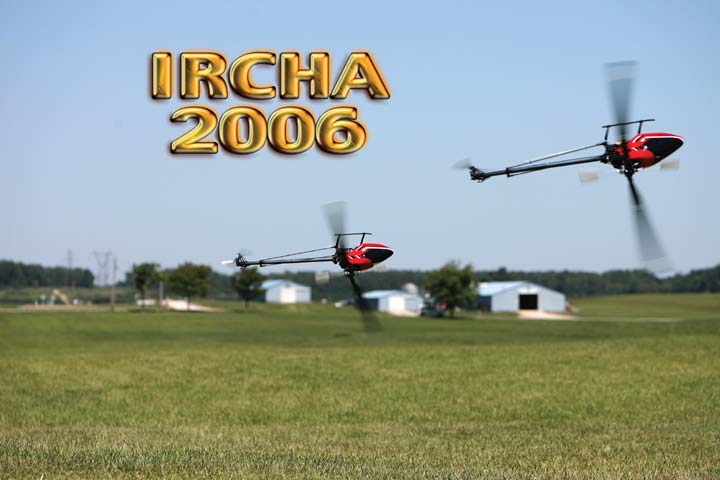
IRCHA 2006

This being an international event, it is perhaps fitting that the most thrilling center-stage flight was delivered by a pilot who traveled one of the greatest distances to attend, Australian 3D star Nigel Brown, who performed a wicked 3D flight during the Saturday demos with his Synergy N9.
Suffice it to say, I've been to a lot of helicopter events and I've literally seen thousands of 3D flights, but with all honesty I have to say that the demo that Nigel performed on Saturday just may have been the best 3D flight I've ever witnessed, and that includes all of the top guys whose names you all know. There is no doubt this Nigel Brown kid can get'r done!
Only the great one, Curtis Youngblood, came close to Nigel's "wow" factor when he dug a trench with his JR Vibe's main rotor and then landed the slightly damaged helicopter to tell us about it, like it was no big deal. Only Curtis could get away with that!
One of the machines that garnered the most attention at IRCHA was the new Align T-Rex 600CF electric machine. This big brother to the original T-Rex comes all decked out with carbon fiber frames and lots of CNC aluminum. The kit includes the electric power system sans batteries with an Align 600L brushless motor, a 75A brushless ESC, and an external BEC included in the kit.
With the T-Rex 600CF you also get a pre-painted fiberglass canopy, carbon fiber tail blades, triple bearing block supported main shaft, fully driven tail auto rotation system, push-pull control linkage, rear tail servo mount, and a 10mm hollow main shaft with an 8mm spindle. The tail rotor on the 600CF is belt driven, and the all up flying weight is approx. 6.6 lbs.


APACHE AH-64

Looking back, my first heli was a Kavan Alouette fixed pitch heli - way, way back in 1976. Many years later, as my interests went elsewhere, I bought my first gasser heli. It was none other than a Vario Benzin Trainer pod and boom. The Benzin is geared for 800mm blades, so this thing can carry some weight. For radio gear, I'm running a JR eight-channel system with Futaba servos. I also use a 6-Volt ni-cad flight pack, and a Futaba G1-governor. The heli is also equipped with a pull-start.
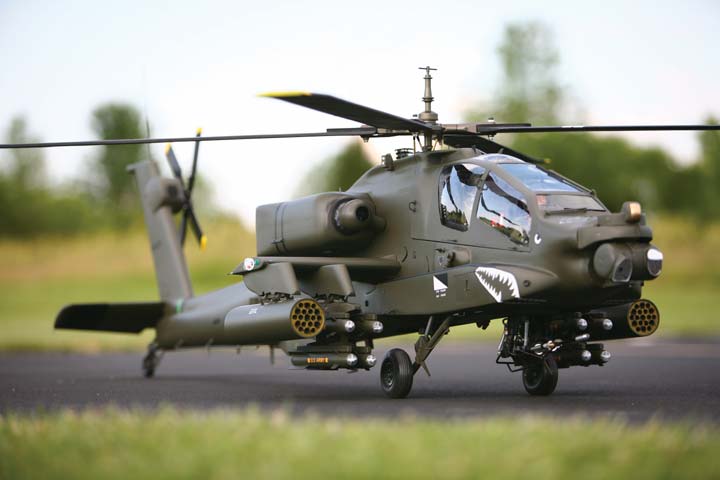
At Toledo, I ended up with the beautiful Apache AH-64 from IndyHelis. The body comes with the tail drive cable and most of the bulkheads pre installed. The laser cut wood made fitting and inter-locking wood parts a breeze. The molded parts required little sanding for a good fit. The included hardware pack gives you everything you need. IndyHelis also offers an accessory armor package - the 30mm chain gun is a work of art. When my son saw the big Apache kit, I could tell he wanted to fly it when it was built . . .


LI-PO BATTERIES / THUNDER POWER


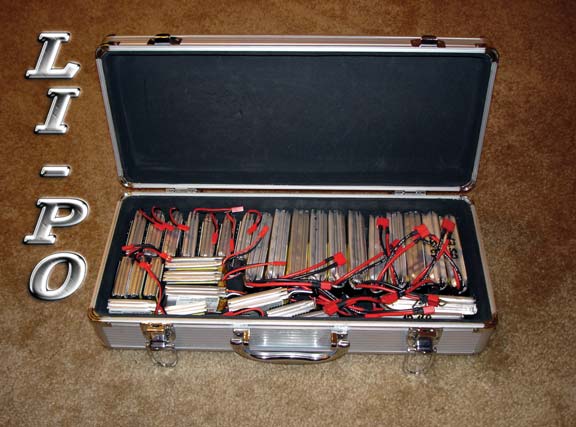
For close to four years, I have been successfully flying all my e-helis with Thunder Power (TP) LI-PO battery packs. In this time frame I have been very careful while charging and using the packs as we, the hobby industry, took advantage of this new battery technology for e-powered flight. It has been a great learning experience for me and I'm definitely an advocate for LI-PO use in our e-powered models. Despite that to this day, I still find myself in conversations with folks who are more than a little weary of using LI-PO's in their e-powered helis. To tell the truth - I'm not sure why some still feel they are unsafe not just the TP brand of LI-PO's but all LI-PO's in general. Some think they are "time bombs" waiting to go off. Well, without bragging, I have to say that I have not had an issue with any of my LI-PO's, to date, that resulted in a fire or any loss. I've only had two packs go bad in all my usage. Basically, they "puffed." One was my fault I had a small 3S 1350 MAH pack in a plane. It was over discharged and ended up


SUBSCRIBE TO ROTORY ROTORY BACK ISSUES DOWNLOAD THIS ISSUE TO YOUR COMPUTER