SUBSCRIBE TO ROTORY ROTORY BACK ISSUES DOWNLOAD THIS ISSUE TO YOUR COMPUTER


JULY AUGUST - 2004


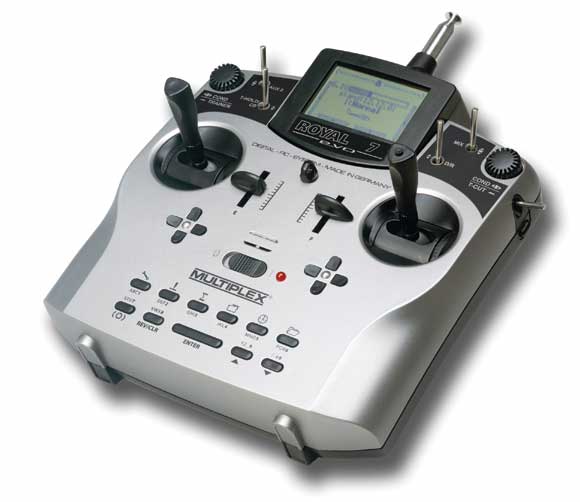
 Hitec Multiplex EVO


The Hitec Multiplex is a system of its own. From its unique styling and feel, all the way to its unbelievable programming abilities, the EVO is a departure in styling and user interface from the standard high-end systems of today.
In order to familiarize our readers with the EVO, let's first look into its mechanical design. The ergonomics of the EVO is totally different from transmitters that we have been used to. The EVO actually fits your hands. The case is designed in a manner that for the first time, you can securely hold the transmitter; yet reach all the switches without "stretching" your fingers. This is primarily achieved by reducing the case thickness from our standard 2 1/4-inch thickness to less than 1 1/2-inches. This allows for a couple of things. First, it reduces the palm from stretching, so the thumbs fit more securely and are centered over the sticks. Second, it allows the "pointer fingers" to reach any of the switches since they are no longer limited by the case width. The new, "thin case" design allows switches that were normally located on the top of the transmitter, to be moved to the front panel, and for the first time, in clear view and reach of the pilot
.


Nuremberg Toy Fair Nitro ­ Part II

This month we will continue with Part 2 of the 2004 Nuremberg Toy Fair story, and the focus is on new glow powered RC helicopters and glow engines. Part 1 of our 2004 Nuremberg Report concentrated on new electric helicopters.
Hanseleit's 3D NT model has been doing very well in Europe. Jan Hanseleit makes five hundred 90-size 3D NT units in his shop every year and they sell immediately. For a while, you had to be on a waiting list to buy one of these machines. In 2003, Jan Hanseleit secretly tested a new smaller size carbon/metal model that can be powered by a 50-size engine or an electric motor. This new model should be ready by the end of 2004. Jan is not too keen on selling his helicopters in large quantities in the US because he can't even keep up with the demand in the European market. Therefore, if one is really bent on buying a 3D NT, then one has to order it from Europe.
Hirobo's new helicopter for 2004 is a clone of the Freya-Eagle WC used by Mr. Manabu Hashimoto to win the 2003 FAI F3C World Championships in Japan. This impeccable looking model is called the Freya-Eagle WC 2003. It has shinny carbon sideframes, carbon boom, and a new SSR VII independent flapping rotor head. Each blade spindle is articulated and flaps independently. The street price of this crème-de-la-crème F3C competition model is $3000


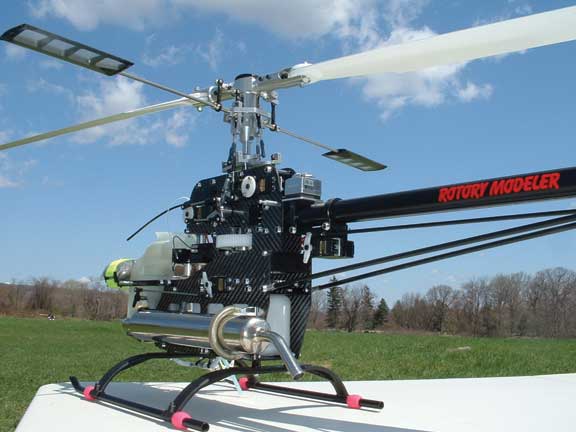
ACROBAT NITRO by Gerd Guzicki


This month we will look at a unique new model that is different from most helicopters on the market. The Acrobat is a high-end 90-size model. This model will be appreciated by heli aficionados. It has a price tag of $1299 in the US and in Europe, the price is about 1000 Euro. Due to the recent weakening of the dollar against the Euro, today's rate is one Euro = $1.25 US. When the dollar gets stronger, we should see the kit prices drop. The Acrobat is a high-end carbon-metal machine and not aimed at competing in the same market niche as other mass-produced 90-size helicopters, such as Fury Extreme, Raptor 90, or Freya X-Spec. The Acrobat was designed by Gerd Guzicki, the same German engineer who designed the famous Joker 30 cell electric helicopter that we reviewed in the November/December 2002 Rotory. That issue of Rotory was very popular and all back issues have been sold out, but one can still order the PDF version from www.rotory.com.
Gerd owns Minicopter, which is a boutique engineering firm near Kassel, Germany. Minicopter specializes in making high-quality, cutting edge technology RC helicopters. Half a dozen specialized workers enjoy their work at Minicopter and they manufacture every kit diligently. Many Acrobat kits have been bought by top European pilots and connoisseurs since their introduction in March 2004. Joe Howard of Joker-USA is the exclusive US importer for all Minicopter products and he stocks all spare parts for the electric Joker and the 90-size Acrobat.


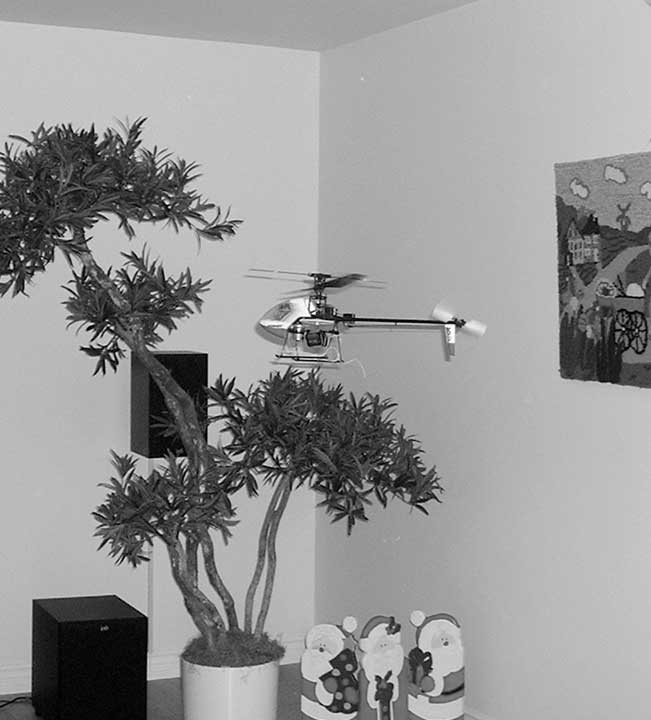
CPX HORNET MICRO


With the arrival of winter, we often find ways to entertain ourselves and stay current as far as flying skills go. The computer flight simulator has in the past filled this gap, but only to a point. While the sim is a valuable training tool, it does have its limitations. The micro electric helicopter has this year taken on a big market share and addresses off-season flying. The technology has advanced to the point of good reliability and economics. Advancements in battery technology have not hurt matters, both allowing for lower gross weights and longer flying times. We may now play safely indoors using small areas to practice our hovering. Larger indoor areas offer space enough for full-blown micro 3-D. This might be the case of a school gym or in our case, an empty hangar.
Two basic types of micros are currently available with slight variances within each category. We have the choice of collective or fixed pitch. Fixed pitch relies upon rotor speed changes in order to alter the overall rotor thrust. Acceptable control is possible, but still it will not offer the same accuracy as collective does. To take the technique further, many micros are using variable rpm tail rotor control in order to keep costs down and the mechanics simpler. This however poses the same performance hurdles of a time delay along with a weaker feeling tail. The method is certainly acceptable for general flying but it has control limitations.


SAFETY IN NUMBERS


Reduction of risk, like that of walking alone in strange places is accomplished by adding more people. Reduction of risk for your helicopter is accomplished by frequent meticulous checking of the helicopter for items such as loose bolts, or frayed wires that could be the harbinger of disaster. Sometimes, assemblies like tail transmissions must be taken apart for inspection.
In previous Helisafety articles, I've talked about creating a flight log to monitor the number of flights you have. I'm still an advocate of this, because after a season's worth of flying, how can you really be sure how many flights you had?
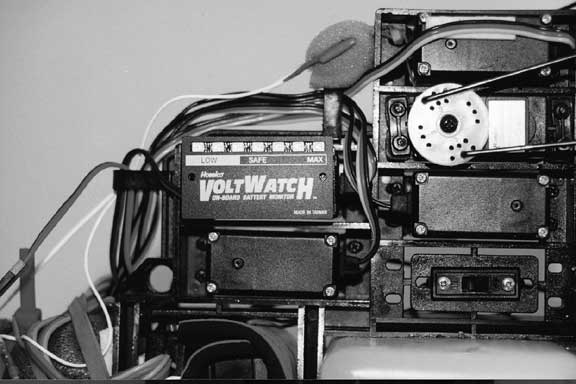
Having a log to record what maintenance functions you performed on your helicopter can easily be combined with the flight log. For example, after 5 flights, recheck the muffler bolts for looseness. I can remember after a long day of flying, I removed the canopy from my helicopter for its final cleaning and noticed that the servo mounting screws for the tail servo had worked loose causing the servo mounting lugs to break! OUCH! Another couple of flights and I'm sure I eventually would have had no tail control at all.
All those wonderful servos and linkages are very well hidden in the canopies and fuselages of our helicopters and, as you know, nothing lasts forever ­ so check them. Canopies are meant to be removed, folks!
In my opinion, helicopters have become more reliable than ever. Manufacturers are using better production machinery that allows closer tolerances for parts and therefore the parts fit better. Electronics have come a long way in the last several years. Mechanical gyros have pretty much gone the way of the dinosaur and have been replaced with solid state piezo gyros that are faster and more reliable. Engines have been redesigned for helicopters and have become more reliable and powerful.
All this however, doesn't mean that helicopters have become impervious to failure. It means that the chances of failure have been significantly reduced with the newer technologies. Servos can still fail, batteries can still fail and bolts can still loosen. Vigilance is the key to success. Your risk of failure drops as you increase your vigilance.


SUBSCRIBE TO ROTORY ROTORY BACK ISSUES DOWNLOAD THIS ISSUE TO YOUR COMPUTER